Managing IT Assets Across Healthcare Environments
Healthcare organizations rely on technology across hospitals, clinics, administrative offices, and diagnostic facilities to support operations and patient services. As devices age or facilities upgrade systems, retiring computers, servers, storage equipment, and networking hardware requires attention to sensitive information, departmental schedules, and equipment accountability. Poorly coordinated removals can disrupt essential workflows or leave data-bearing devices in unsecured storage.
Silicon Lifecycle helps healthcare organizations coordinate IT equipment collection, retirement, and asset recovery evaluation across clinical and nonclinical environments. Whether upgrading workstations, consolidating facilities, or clearing surplus infrastructure, we support planned technology transitions that consider operational access and information security needs. Our solutions help healthcare teams manage retired technology responsibly while exploring reuse and recovery opportunities.
Managing Technology Across Care Environments
From hospital workstation upgrades to facility consolidations, Silicon Lifecycle helps healthcare organizations coordinate equipment retirement, protect sensitive data, and manage surplus technology responsibly.

Hospital Workstation Upgrades
Hospital workstation upgrades often involve replacing computers across nursing stations, administrative departments, and shared clinical spaces. Silicon Lifecycle helps plan collection of retired IT equipment around departmental access requirements, supporting organized handoffs while minimizing interference with everyday healthcare operations.
Healthcare Facility Consolidations
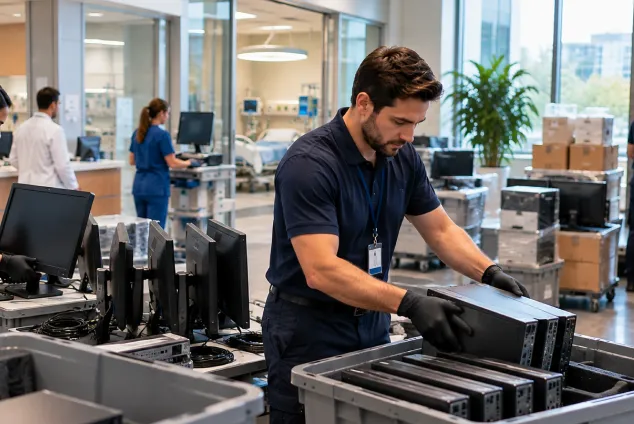
Clinic relocations and facility consolidations can leave healthcare organizations with surplus computers, servers, and networking hardware across several sites. Silicon Lifecycle supports coordinated equipment collection and asset recovery evaluation, helping teams clear spaces and maintain ownership visibility during transitions.
Frequently Asked Questions
Explore common questions about healthcare IT asset disposition, patient data security, hospital equipment retirement, and responsible technology management.
Healthcare organizations should identify retired devices containing patient or operational information, maintain equipment inventories, and establish secure data handling requirements. Silicon Lifecycle supports healthcare IT asset disposition through coordinated equipment collection, data sanitization services, and responsible asset retirement based on project needs.
Retired computers, servers, and storage devices may retain protected health information (PHI), making appropriate data sanitization or destruction essential. Healthcare organizations should follow applicable privacy regulations, including HIPAA where relevant, and their internal security policies. Silicon Lifecycle offers data destruction and sanitization services that can be included in an agreed equipment retirement project.
Healthcare facilities commonly retire desktop computers, laptops, servers, storage devices, monitors, and networking equipment used across clinical and administrative environments. Silicon Lifecycle can evaluate surplus IT hardware for suitable collection, retirement, recycling, or asset recovery options. Specialized medical equipment should be reviewed separately to confirm service suitability.
Silicon Lifecycle can review projects involving hospitals, outpatient clinics, diagnostic centers, and administrative locations. Healthcare organizations can provide equipment quantities, facility addresses, access restrictions, and preferred collection schedules to help determine suitable logistics arrangements across multiple sites.
Hospital IT teams can reduce disruption by coordinating device retirement around departmental schedules, clinical workflows, and approved access windows. Silicon Lifecycle supports planned equipment collection and retirement arrangements that account for site requirements, helping healthcare organizations manage technology transitions while maintaining operational priorities.
Yes. Surplus laptops, workstations, servers, and networking equipment may retain resale value depending on their age, specifications, condition, and market demand. Silicon Lifecycle evaluates eligible healthcare IT assets for potential buyback, refurbishment, and remarketing opportunities, subject to appropriate data security requirements.
Healthcare organizations can provide an equipment inventory, facility locations, estimated device quantities, collection timelines, and applicable data security or access requirements. Silicon Lifecycle can review these details and discuss suitable options for equipment retirement, collection, and potential asset recovery.
Simplify Healthcare IT Asset Retirement
Manage surplus healthcare technology with secure data handling, coordinated equipment collection, and responsible asset recovery.
