Managing IT Infrastructure Across Data Center Environments
Data centers operate complex environments where servers, storage systems, networking equipment, and supporting infrastructure must work together reliably. As facilities modernize, consolidate, or migrate workloads, retiring outdated hardware requires careful coordination around system dependencies, operational schedules, and site access. Unplanned removal can interrupt critical services, complicate equipment tracking, and leave valuable technology unused.
Silicon Lifecycle supports data center operators with organized infrastructure retirement, equipment collection, and asset recovery planning. Whether closing a facility, replacing server fleets, or consolidating infrastructure, we help coordinate the handling of retired IT assets while addressing data security and logistical requirements. Our data center lifecycle solutions support efficient transitions, responsible equipment management, and opportunities to recover remaining hardware value.
Managing Critical Infrastructure Transitions
From infrastructure upgrades to facility consolidations, Silicon Lifecycle helps data centers coordinate equipment retirement, manage surplus hardware, and recover value.

Server & Infrastructure Refreshes
Server and storage upgrades can leave data centers with substantial retired hardware while active systems remain in service. Silicon Lifecycle helps coordinate equipment retirement and collection around infrastructure refresh schedules, supporting orderly transitions and recovery opportunities for eligible assets.
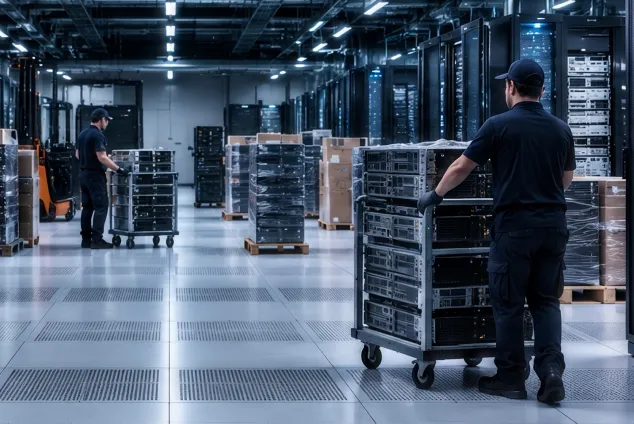
Data Center Consolidations & Closures
Facility closures and data center consolidations involve interconnected systems, restricted access, and large equipment volumes. Silicon Lifecycle supports planned collection and removal of retired infrastructure, helping teams manage site transitions, maintain asset accountability, and assess surplus hardware for recovery.
Frequently Asked Questions
Find answers to common questions about data center decommissioning, infrastructure retirement, equipment removal, and asset recovery.
Data center decommissioning is the planned retirement and removal of outdated or unwanted IT infrastructure. It typically involves equipment assessment, shutdown coordination, hardware disconnection, removal, and appropriate asset disposition. The scope depends on the facility and the systems scheduled for retirement.
Data center operators can reduce disruption by identifying system dependencies, planning shutdown schedules, and coordinating equipment removal around active operations. Silicon Lifecycle supports organized infrastructure retirement and collection planning based on the project’s operational requirements.
Silicon Lifecycle evaluates retirement projects involving enterprise servers, storage arrays, networking hardware, and related data center equipment. The exact scope depends on hardware type, quantity, site accessibility, and project requirements.
Silicon Lifecycle can review equipment retirement and collection requirements for data center consolidations, facility closures, and infrastructure migrations. Projects are assessed according to site conditions, equipment volumes, timelines, and transportation needs.
Servers and storage systems may retain confidential business information after they are removed from active use. Appropriate data sanitization or physical destruction should be planned before reuse or disposal. Silicon Lifecycle offers data destruction and sanitization services that can be discussed as part of the project scope.
Yes. Retired enterprise hardware may retain resale value depending on its specifications, condition, generation, and market demand. Silicon Lifecycle evaluates eligible equipment for potential asset recovery and buyback opportunities.
Planning a Data Center Infrastructure Transition?
Simplify infrastructure retirement, coordinate equipment removal, and explore recovery opportunities with Silicon Lifecycle.
